


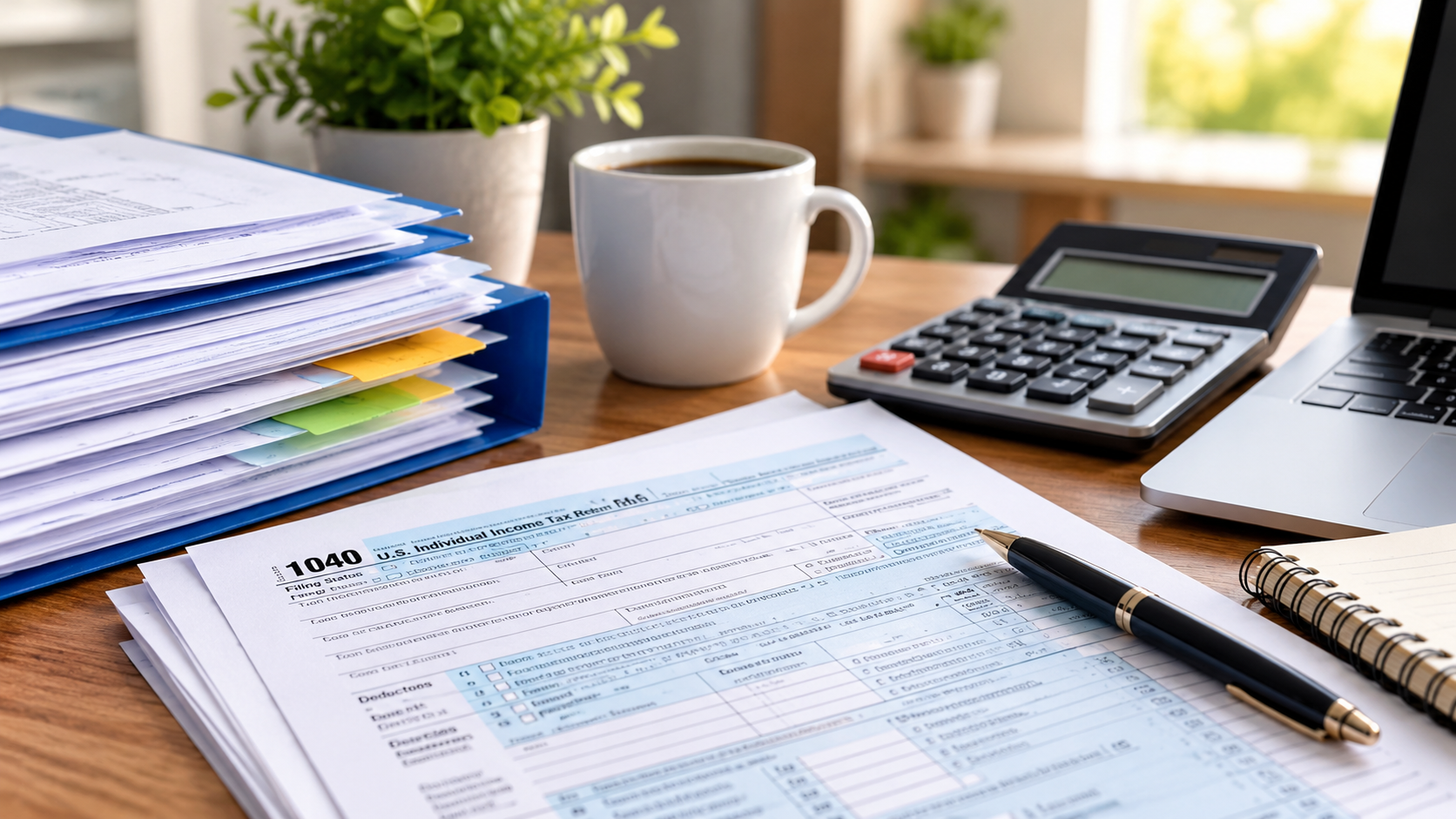
Preparing for your tax appointment doesn’t have to be stressful. However, arriving without the right documents can delay your tax return, create unnecessary follow-up questions, and increase the risk of missing important deductions or credits.
Whether you’re filing as an individual, a married couple, a retiree, or a self-employed professional, having your paperwork organized makes the entire process easier.
Form 1040 tax preparation is the foundation of most individual federal income tax returns. Understanding what information your tax professional needs can help you prepare an accurate return, identify potential tax-saving opportunities, and avoid last-minute surprises.
At Tax Alternatives, we help individuals and families in Brentwood, Nashville, and surrounding Tennessee communities navigate tax preparation with greater confidence.
This guide explains what to bring to your tax appointment, which documents are commonly overlooked, and how to prepare before meeting with your tax professional.
What Is IRS Form 1040?
IRS Form 1040 is the standard federal income tax return used by individual taxpayers to report annual income, calculate federal income taxes, claim eligible deductions and credits, and determine whether they owe additional taxes or qualify for a refund.
Depending on your financial situation, Form 1040 may include information related to:
- Employment income
- Self-employment earnings
- Retirement distributions
- Investment income
- Rental property income
- Tax deductions
- Tax credits
- Estimated tax payments
- Federal income tax withholding
Some taxpayers also need additional schedules and supporting forms.
Although tax preparation software can simplify calculations, accurate filing still depends on providing complete and correct information.
1. Personal Identification and Basic Information
Before your tax appointment, gather the personal information needed to prepare your return.
This typically includes:
- Your full legal name
- Social Security number or Individual Taxpayer Identification Number
- Date of birth
- Current mailing address
- Valid photo identification
- Spouse’s information, if filing jointly
- Social Security numbers or ITINs for dependents
- Bank account information for direct deposit or electronic payment
If your name changed because of marriage, divorce, or another reason, make sure your records match the information held by the Social Security Administration.
Incorrect personal information can cause electronic filing rejections or refund delays.
Bring Last Year’s Tax Return
Your previous federal tax return is one of the most useful documents to bring.
It helps your tax professional review prior income sources, deductions, credits, carryovers, and other information that may affect your current return.
If you are working with a new tax preparer, bringing your previous return can make the process significantly smoother.
2. Gather All W-2 and 1099 Income Forms
Reporting income accurately is an essential part of Form 1040 tax preparation.
If you worked as an employee, bring Form W-2 from every employer you worked for during the tax year.
If you earned income from other sources, you may receive one or more 1099 forms.
Common examples include:
- Form 1099-NEC: Payments for independent contractor or freelance work
- Form 1099-MISC: Certain types of miscellaneous income
- Form 1099-INT: Interest income
- Form 1099-DIV: Dividends and certain investment distributions
- Form 1099-B: Sales of stocks and other securities
- Form 1099-K: Certain payments processed through payment platforms
- Form 1099-R: Retirement account distributions
- Form SSA-1099: Social Security benefits
You should also report taxable income even when you did not receive an information return.
For example, a freelancer may have taxable business income from a customer who was not required to issue Form 1099.
Don’t Forget Additional Income Sources
Other income may include rental payments, unemployment compensation, gambling winnings, or taxable transactions involving digital assets.
Bring relevant records so your tax professional can determine how each item should be reported.
3. Bring Records of Self-Employment Income and Expenses
If you operate a small business, work as an independent contractor, or earn money through a side business, your tax appointment may require additional documentation.
Self-employed individuals commonly report business income and expenses using Schedule C, which accompanies Form 1040.
Helpful records include:
- Business income summaries
- Profit and Loss Statements
- Business bank statements
- Business credit card statements
- Receipts for deductible expenses
- Vehicle mileage records
- Equipment purchase records
- Home office information, when applicable
- Contractor payment records
- Business insurance expenses
Organized bookkeeping can make tax preparation much easier.
If your business records are incomplete, consider reviewing them before your appointment rather than waiting until your return is being prepared.
4. Prepare Your Deduction Documents
Tax deductions can reduce taxable income, but the deductions available to you depend on your individual circumstances.
Many taxpayers claim the standard deduction. Others may benefit from itemizing their deductions.
Your tax professional can help determine which approach is appropriate.
Mortgage Interest and Property Taxes
Homeowners should bring applicable mortgage interest statements, including Form 1098.
Property tax records may also be relevant when evaluating itemized deductions.
Charitable Contributions
If you made donations to qualified charitable organizations, bring supporting documentation.
This may include receipts, acknowledgment letters, and records of eligible noncash contributions.
Medical Expenses
Certain unreimbursed medical and dental expenses may qualify as itemized deductions when they exceed the applicable income threshold.
Bring relevant records if you believe your expenses may be substantial enough to qualify.
Retirement and Health Savings Contributions
Depending on your circumstances, contributions to eligible retirement accounts or Health Savings Accounts may affect your taxes.
Relevant forms can include Form 5498-SA and Form 1099-SA for HSA activity, along with contribution records.
Eligibility, deduction limits, and documentation requirements vary, so your tax professional should review your specific situation.
5. Bring Information About Dependents and Family Changes
Changes in your family situation can affect filing status, tax credits, and other parts of your return.
Tell your tax professional if you experienced events such as:
- Marriage
- Divorce
- Birth or adoption of a child
- Changes in dependent care
- A dependent beginning college
- A family member moving into your household
- Changes in custody or financial support
For dependents, bring identifying information and any relevant documentation related to education, childcare, or eligibility for tax benefits.
Child and Dependent Care Expenses
If you paid for qualifying childcare or dependent care so you could work or look for work, bring payment records and provider information.
You may need the provider’s name, address, and taxpayer identification number.
These records can help determine whether you qualify for the Child and Dependent Care Credit.
6. Don’t Forget Education Tax Documents
Education expenses may provide opportunities for eligible tax credits.
If you, your spouse, or a dependent attended an eligible educational institution, bring:
- Form 1098-T
- Tuition payment records
- Scholarship information
- Records of qualifying education expenses
- Form 1098-E for student loan interest, if applicable
Potential benefits may include the American Opportunity Tax Credit or Lifetime Learning Credit.
Eligibility depends on factors such as income, enrollment status, qualifying expenses, and whether another taxpayer claims the student as a dependent.
7. Gather Retirement and Investment Records
Retirement and investment activity can significantly affect your federal income tax return.
If you received retirement income, bring documents related to pensions, IRAs, 401(k) distributions, and Social Security benefits.
If you sold investments, provide records showing purchase costs, sale proceeds, and any relevant adjustments.
These details help determine taxable gains or losses.
Cryptocurrency and Digital Asset Transactions
Taxpayers who bought, sold, exchanged, or received digital assets may need to report certain transactions.
Bring transaction histories from exchanges, wallets, and other platforms.
Even if you did not receive a tax form, reportable transactions may still need to appear on your return.
8. Provide Records of Estimated Tax Payments
If you are self-employed, receive substantial investment income, or have other income without sufficient withholding, you may have made estimated tax payments during the year.
Bring records showing:
- Payment dates
- Payment amounts
- IRS payment confirmations
- Any payments applied from a prior-year refund
Your tax professional needs this information to calculate your remaining balance or refund accurately.
Missing estimated payment information can create confusion and may lead to an incorrect return.
9. Bring Health Insurance and Marketplace Information
Health insurance documentation may be important, particularly if you purchased coverage through the Health Insurance Marketplace.
If you received advance premium tax credits, bring Form 1095-A.
This information is generally needed to reconcile those credits on your federal return.
If you are self-employed and paid for qualifying health insurance, bring records of premiums and coverage.
Your tax professional can determine whether any applicable deduction is available.
10. Bring IRS Letters and Tax Notices
If you received a letter from the IRS, don’t leave it at home.
Tax notices may involve:
- Income discrepancies
- Missing information
- Adjustments to previous returns
- Identity verification
- Estimated tax issues
- Outstanding balances
- Other tax account matters
Even if a notice seems unrelated to your current return, your tax professional should know about it.
Bring the complete notice, including all pages, so the issue can be reviewed properly.
11. Understand Tennessee Tax Considerations
Tennessee does not impose a state individual income tax on wages or other personal income.
However, Brentwood and Nashville residents still need to meet applicable federal tax requirements.
Additionally, business owners may have Tennessee business tax, franchise tax, excise tax, sales tax, or other filing responsibilities depending on their activities.
If you moved to Tennessee from another state, worked in multiple states, or earned income connected to another state, additional state tax returns may be necessary.
Be sure to tell your tax professional about any interstate employment, residency changes, or business activity.
12. Review Your Documents Before Your Appointment
Before meeting with your tax professional, take a few minutes to review your records.
Confirm that your documents are complete and that you have information for all known income sources.
If you are missing a form, contact the employer, financial institution, or other issuing organization.
Avoid guessing amounts or submitting incomplete information just to file sooner.
A little preparation can prevent significant delays later.
Quick Form 1040 Tax Appointment Checklist
Use this checklist before your appointment:
Photo identification and Social Security numbers
Previous year’s tax return
All W-2 forms
All applicable 1099 forms
Self-employment income and expense records
Mortgage interest and property tax records
Charitable contribution documentation
Retirement and HSA contribution records
Investment and digital asset transaction records
Education and childcare expense information
Estimated tax payment confirmations
Health Insurance Marketplace Form 1095-A, if applicable
IRS letters or notices
Bank account information for refunds or payments
Not every document applies to every taxpayer. Your tax professional may request additional information based on your financial circumstances.
Why Professional Form 1040 Tax Preparation Matters
Preparing your own taxes may seem simple, especially when you have only one income source.
However, tax situations can become more complicated after major life changes, business activity, investment transactions, retirement distributions, or changes in income.
Professional tax preparation can help you:
- Report income accurately
- Identify eligible deductions and credits
- Review filing status
- Reduce avoidable errors
- Understand tax balances and refunds
- Prepare for future tax obligations
- Identify opportunities for year-round tax planning
A tax professional can also help explain how financial decisions made today may affect future returns.
Final Thoughts: Arrive Prepared and File With Confidence
Successful Form 1040 tax preparation begins before your appointment.
By gathering income statements, deduction records, dependent information, investment documents, and payment confirmations, you can help make the filing process more efficient.
Accurate documentation also gives your tax professional a better understanding of your overall financial situation.
Whether your return is straightforward or involves several income sources, being organized can reduce stress and help avoid unnecessary delays.
At Tax Alternatives, we provide individual tax preparation and tax planning support for individuals, families, and self-employed professionals in Brentwood, Nashville, and surrounding Tennessee communities.
Our goal is to help you understand your tax responsibilities, prepare accurate returns, and approach tax season with greater confidence.
Ready to prepare your Form 1040 without the last-minute stress? Fill out the form below to contact Tax Alternatives and schedule your tax preparation appointment. Our team is ready to help you get organized and prepare for tax season.
Contact Us